July 6, 2026
Which windshield repair resin should you choose? — the official Delta Kits guidance
The success of a windshield repair depends largely on whether you choose the right resin for the damage. This guide is based on the official Delta Kits resin comparison chart and takes account of two main factors: the type of damage and the temperature.
The two decisive factors: viscosity and temperature
Viscosity (cps) tells you how thin the resin is. A lower value means a thinner resin that flows deep into tight cracks; a higher value means a thicker resin that fills larger cavities and surface craters.
Temperature matters just as much: resin thickens in the cold, so at low temperatures you need a lower-viscosity resin. That is why Delta Kits also states a recommended temperature range for each resin.
Injection (repair) resins
| Resin | Viscosity | Recommended use | Temperature |
|---|---|---|---|
| ProBond 5010 | 11 cps | Small bullseye, small combination break, star break, short crack | Even in cold (below ~38 °C) |
| ProBond AF (acid-free) | 11 cps | Small bullseye, small combination break, star break | Even in cold (below ~38 °C) |
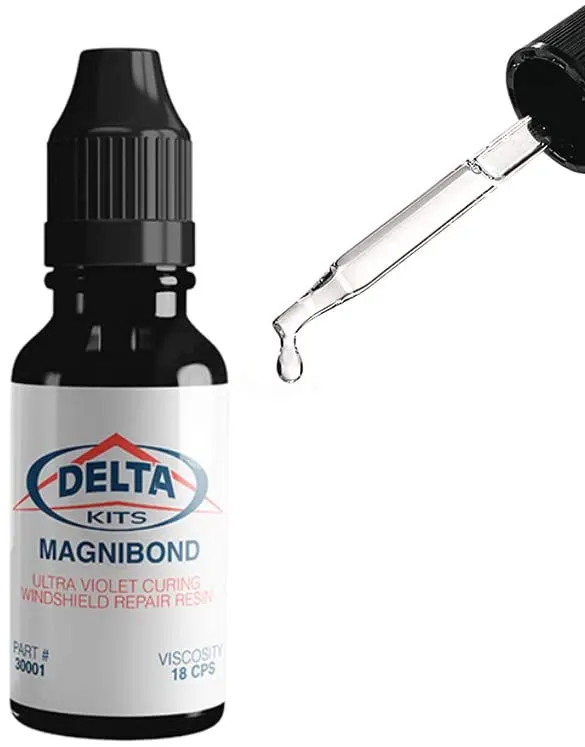
| MagniBond | 18 cps | Every break type, including long cracks — the “do-it-all” | Any temperature |
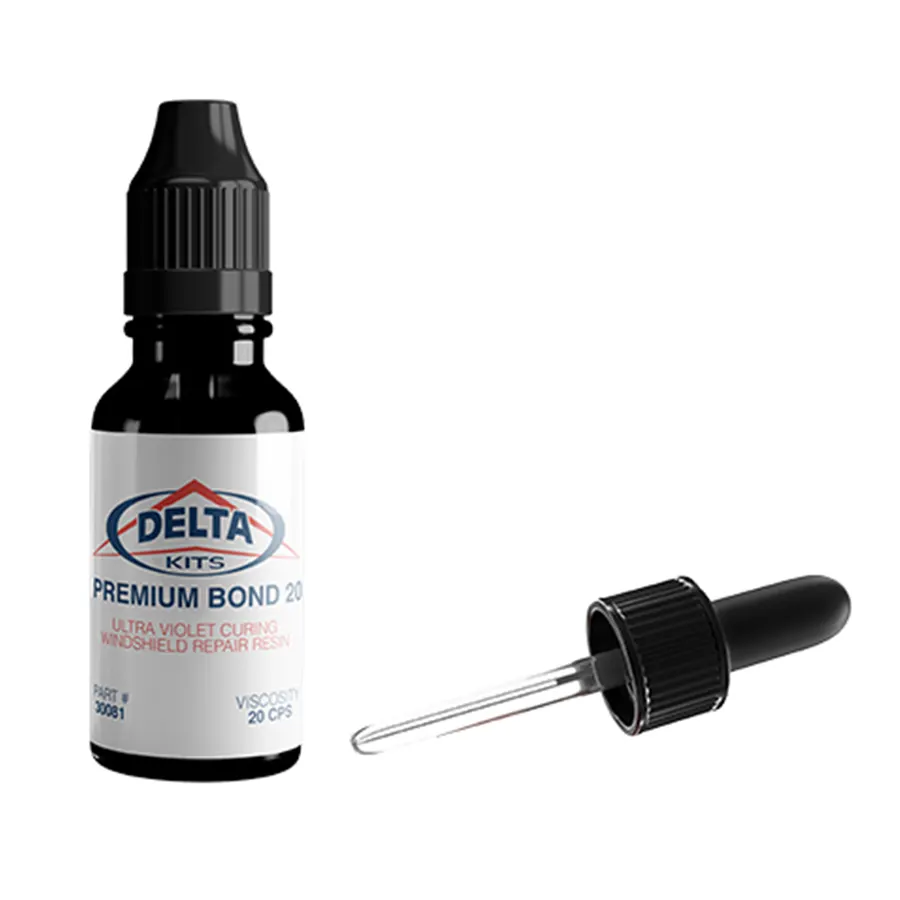
| Premium Bond 20 | 20 cps | Every break type, outstanding on long cracks | Any temperature |
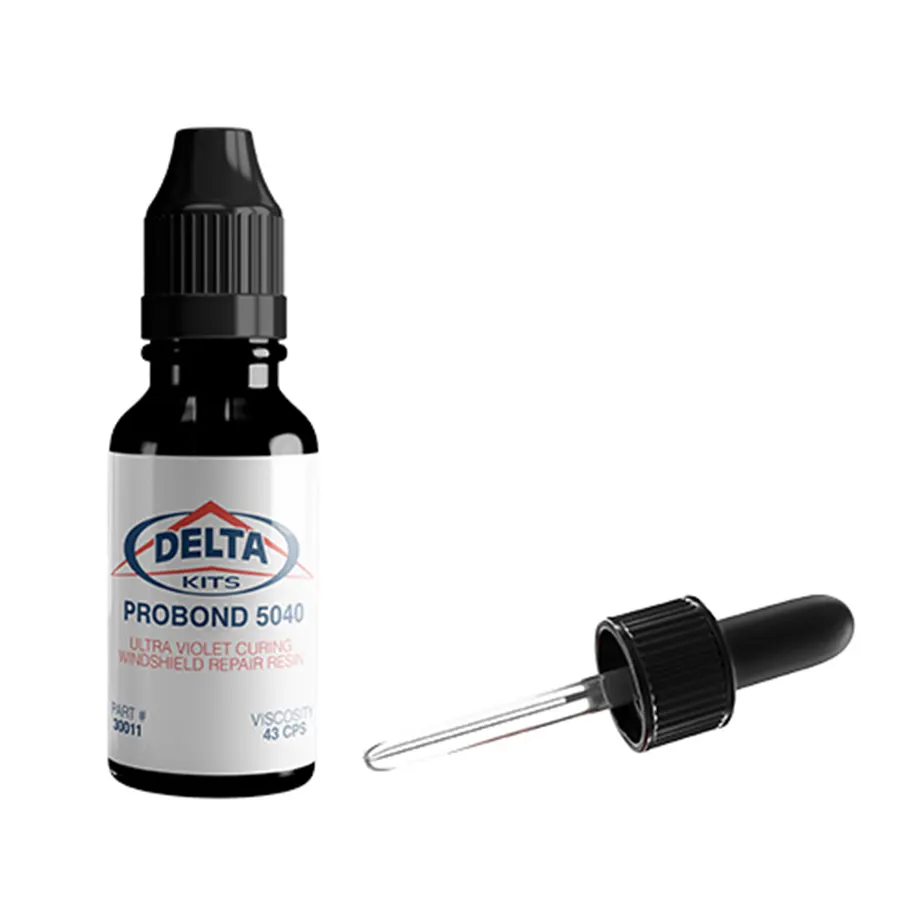
| ProBond 5040 | 43 cps | Small/large bullseye, small/large combination break, star break | Above ~4 °C |
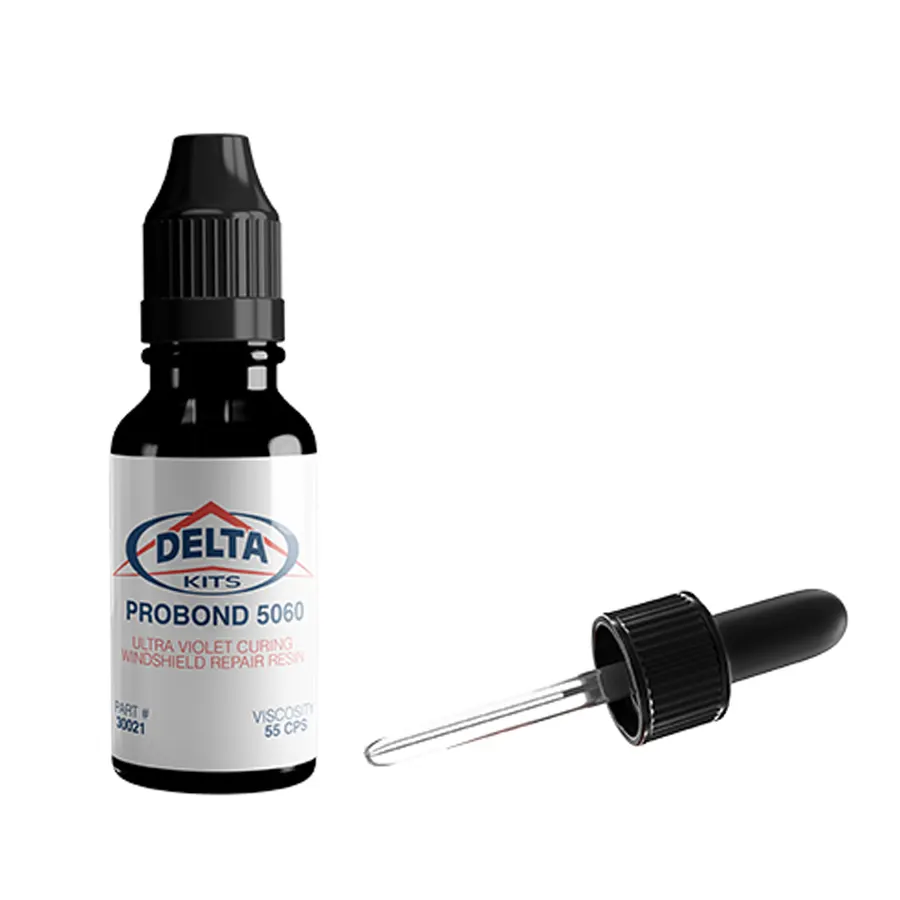
| ProBond 5060 | 55 cps | Small/large bullseye, small/large combination break | Above ~16 °C |
How to choose between the injection resins?
- In cold weather, or on tight, fine damage: the water-thin ProBond 5010 or the acid-free ProBond AF (11 cps) are a good choice — they flow into even the tightest crack.
- If you want one all-purpose resin: MagniBond (18 cps) or Premium Bond 20 (20 cps) — both work on every break type at any temperature, and they are outstanding on long cracks.
- On larger bullseye or combination breaks, on warmer days: the thicker ProBond 5040 (43 cps) or 5060 (55 cps) fills a larger cavity better — but they require a higher temperature.
Pit finishing resins
To fill and cap the surface crater (the pit) you need a thick, high-viscosity resin:
| Resin | Viscosity | Recommended use |
|---|---|---|
| Premium Pit | 1900 cps | Large cavities, pit capping |
| Premium Bond 3000 | 3000 cps | Flat glass repair, large cavities, pit capping |
| Premium Pit Plus | 3600 cps | Flat glass repair, large cavities, pit capping |
The practical summary
- One resin for everything: MagniBond or Premium Bond 20.
- Cold + fine damage: ProBond 5010 / AF.
- Large damage + heat: ProBond 5040 / 5060.
- Surface pit: the Premium Pit range.
We use these Delta Kits resins in our own workshop every day — the recommendations above reflect both the manufacturer’s official chart (deltakits.com) and our own experience. If you are unsure, get in touch; you can find the full resin range here.